
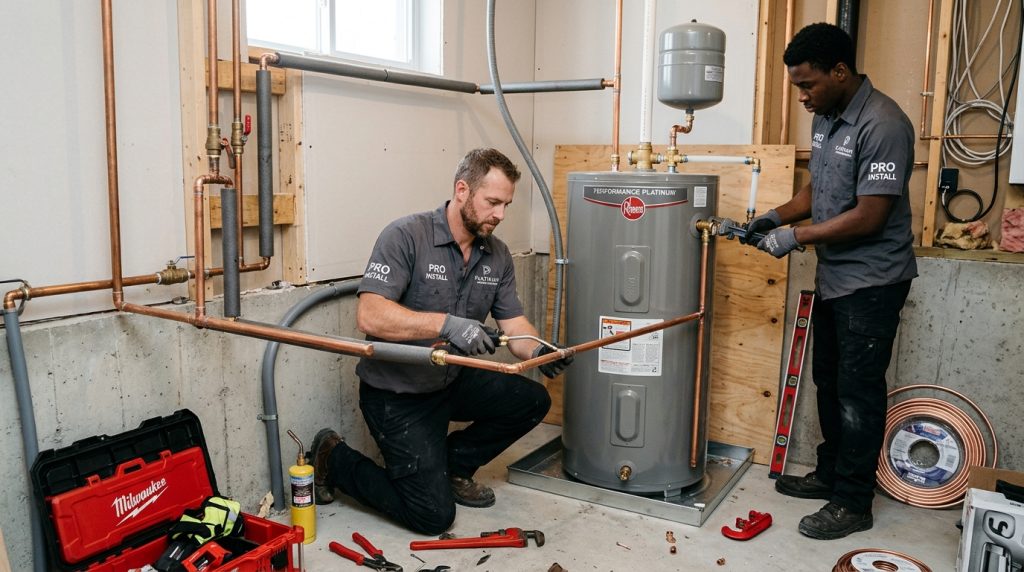
A dependable hot water tank installation is more than the placement of a new appliance: it is a coordinated process involving correct sizing, safe connections, careful testing, and settings suited to the property. Each decision affects comfort, energy use, and the system’s ability to deliver hot water consistently over time.
Professional plumbers assess the existing setup before work begins, then follow applicable safety standards and manufacturer instructions throughout the installation. Understanding these steps helps homeowners recognize what a thorough service should include—and why efficient performance depends on details that may be hidden behind the tank.
Installation planning for a reliable hot water tank
A successful installation begins with a review of household demand, the existing plumbing, and the location available for the unit. The installer checks access, ventilation requirements where applicable, drainage, fuel or electrical supply, and the condition of nearby pipework. Identifying constraints early can prevent hurried changes once the old tank has been removed.
Tank sizing is a central part of this assessment. A unit that is too small may struggle during periods of high demand, while an oversized model can use more energy than necessary. Professional plumbers consider the number of occupants, typical water-use patterns, and the heater’s recovery capacity rather than relying on the dimensions of the old tank alone.
The chosen model also shapes expected operating costs and performance. Comparing options for water-heating efficiency can help clarify which features matter, while a separate overview of water heater choices may provide useful background before discussing specifications with an installer.
Before work starts, the service plan should identify the equipment, installation requirements, disposal arrangements, and any required permits or inspections. Clear preparation keeps the project orderly and gives the property owner a better understanding of what the work will involve.
Installation workmanship and pipe connections
Once the site is prepared, the old unit is isolated and removed in line with applicable procedures. The new tank must sit on a stable, suitable surface, with enough clearance for maintenance and access to controls. Placement also needs to account for the manufacturer’s requirements and local building rules.
Pipe connections deserve careful attention because small defects can lead to leaks, heat loss, or unreliable operation. The installer connects the water supply and outlet, checks shut-off valves and fittings, and confirms that discharge and drainage components are correctly arranged for the specific system. Materials and connection methods should be appropriate for the appliance and local code.
The work should also preserve access to essential components, including the temperature and pressure relief valve. Insulation on suitable hot-water pipes can reduce heat loss as water travels to taps, although it must not cover controls, valves, or surfaces that require ventilation. Good workmanship protects both system performance and future serviceability.
Several checks help distinguish a complete installation from a simple equipment swap:
- Secure placement: The tank is level, stable, and accessible for inspection and maintenance.
- Sound pipe connections: Fittings are correctly installed and checked for leaks.
- Appropriate insulation: Accessible hot-water pipes are insulated without obstructing safety devices.
- Code-aware setup: Clearances, drainage, and safety components meet applicable requirements.
Every connection is part of a larger system, so careful assembly provides the foundation for testing and adjustment.
Installation testing, safety, and energy efficiency
After connecting the unit, the installer fills and purges the tank according to the manufacturer’s instructions, then examines the system for leaks. Pressure testing, where required and appropriate to the equipment, helps verify that connections and components withstand operating conditions. The method must follow local requirements and should not exceed the appliance’s specified limits.
Safety standards govern more than pipework. Depending on the type of heater and local rules, the job may involve electrical or fuel connections, ventilation, temperature controls, and discharge piping. These elements should be checked by qualified professionals; incorrect adjustments can create risks that are not obvious during normal use.
Thermostat setup affects both comfort and energy efficiency. The installer should configure the control in accordance with manufacturer guidance and applicable health and safety recommendations, then explain how the setting can be adjusted safely. A temperature that is poorly chosen may waste energy or fail to meet household needs, so setup should suit the system and the occupants.
Testing should conclude with a clear explanation of operation, maintenance needs, and warning signs such as unusual noise, moisture around fittings, or inconsistent hot-water delivery. For a broader understanding of how water-heating systems work, a focused installation and safety video can complement—but never replace—professional inspection.
Installation quality, warranty, and long-term performance
A reliable service includes documentation as well as physical work. The owner should receive relevant product information, details of completed work, and guidance on inspection or maintenance. An installation warranty may cover workmanship for a stated period, while the manufacturer’s warranty applies under its own terms; these protections are distinct and should be reviewed before the job begins.
The following table summarizes what to confirm with the service provider and why each item matters:
| Installation detail | What to confirm | Why it matters |
|---|---|---|
| Tank sizing | Capacity and recovery rate suit expected demand | Supports dependable hot-water delivery |
| Safety checks | Valves, discharge, and required connections are inspected | Helps protect occupants and property |
| Pressure testing | Checks follow the appliance instructions and local rules | Can reveal connection problems before handover |
| Warranty documents | Coverage, exclusions, and service requirements are explained | Clarifies responsibilities after installation |
Energy efficiency also depends on how the system is used and maintained after installation. Keeping the surrounding area clear, arranging recommended inspections, and addressing leaks or changes in performance promptly can help preserve reliable operation. A professional handover makes these responsibilities easier to understand.


