
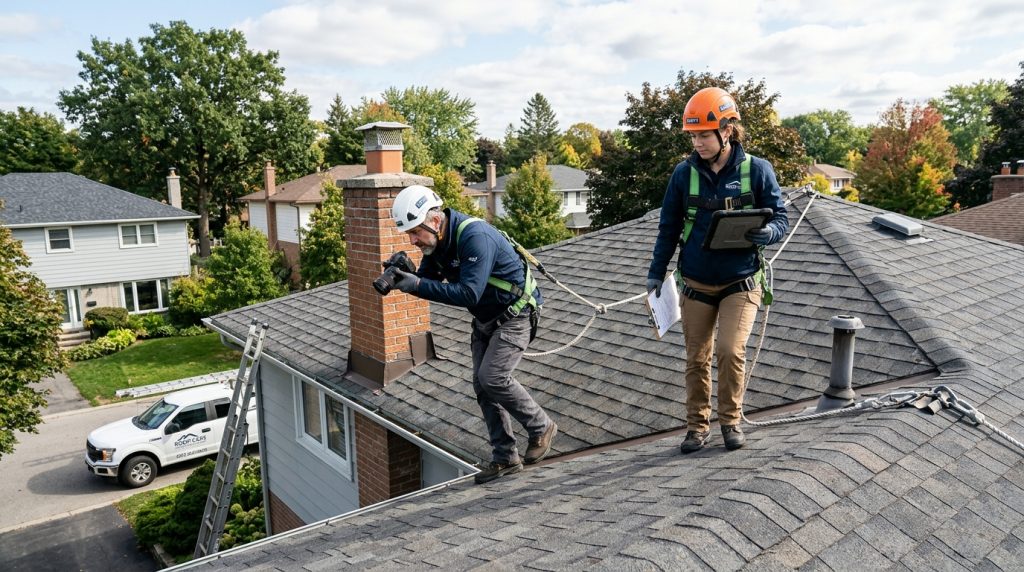
A roof rarely fails without warning. Small changes in the shingles, flashing, gutters or ceilings can reveal that water is finding a way past the roof’s outer layers, sometimes long before a leak becomes obvious indoors.
Recognizing these technical signs early helps distinguish routine wear from damage that needs a roof repair service. Knowing what to look for—and when to leave an inspection to a qualified professional—can help limit deterioration and protect the structure beneath the roof.
Inspect exterior signs that point to roof damage
Start with observations from the ground or from a safe vantage point; climbing onto a roof can lead to falls and may worsen fragile areas. Look for changes across the whole roof, since a pattern of small defects can be more revealing than one isolated mark.
Identify missing shingles and curling edges
Missing shingles leave the underlayment exposed to rain, wind and sunlight. Even a small bare patch can become an entry point for moisture, while nearby shingles may loosen if the original damage followed a storm.
Curling shingles are another warning. Edges that lift or surfaces that buckle can indicate aging, poor ventilation or prolonged exposure to heat and moisture. Because these changes reduce the roof’s ability to shed water, they merit a closer professional assessment.
Examine flashing and granule loss
Damaged flashing around chimneys, vents, skylights and roof valleys can let water pass through joints that should remain sealed. Rust, separation, cracked sealant or bent metal are signs that the protective detail may no longer be working as intended.
Look, too, for granule loss: dark, smooth patches on shingles or a buildup of gritty material in gutters. Granules shield asphalt shingles from sunlight and weather, so widespread loss can point to wear that leaves the surface increasingly vulnerable.
These surface clues are easier to address before they affect the roof deck. For general guidance on exterior upkeep, readers can also explore home maintenance considerations and practical advice for caring for a property.
Trace interior clues to roof leaks
Exterior damage is not always easy to spot, particularly from the ground. Inside the building, however, stains, odors and changes in the ceiling can reveal that moisture has already crossed the roof assembly.
Recognize water stains and recurring leaks
Water stains on ceilings or upper walls often appear as discolored rings, streaks or patches. Their location does not necessarily match the point where water enters: moisture can travel along rafters or other structural elements before becoming visible indoors.
Roof leaks may also show up as damp insulation, peeling paint, bubbling plaster or a persistent musty smell. A stain that reappears after drying suggests that the source has not been resolved. Recording when it appears and which areas are affected can help a roofing professional investigate more efficiently.
Check for daylight and structural changes
Daylight through roof boards or around roof openings is a direct sign that the outer covering or its supporting layers may be compromised. Any visible opening should be treated seriously, even if there is no active dripping at the time of inspection.
A sagging roof can indicate a deeper problem involving the deck, supports or accumulated moisture. A visible dip, a ridge that appears uneven, or ceilings that seem to bow warrant prompt attention. These signs call for professional evaluation rather than a surface-level patch.
Interior symptoms can point to risks beyond the roofing materials themselves. Background reading on maintaining a home’s interior may help explain why moisture should be investigated rather than simply covered over.
Assess drainage and broader roof conditions
Water management around the roof matters as much as the condition of individual shingles. When drainage is obstructed or moisture remains on shaded surfaces, wear can accelerate and expose weak points across the roofing system.
Clear blocked gutters and watch for moss growth
Blocked gutters can cause rainwater to overflow, collect near the roof edge or back up beneath shingles. Leaves, sediment and other debris may also hide deterioration, so the gutters and downspouts should be checked as part of routine exterior observation.
Moss growth often develops in damp, shaded areas. Its presence does not automatically prove that a roof is leaking, but moss can hold moisture against the surface and, as it spreads, may lift or damage shingles. Avoid scraping or pressure-washing roofing materials, which can cause further harm.
Compare visible symptoms before arranging repairs
One sign may have several possible causes, so it helps to consider the location, extent and timing of the damage together. The table below summarizes common clues and why they deserve attention.
| Visible sign | Possible concern | Recommended response |
|---|---|---|
| Missing or curling shingles | Exposed or weakened roof covering | Arrange a qualified inspection |
| Water stains or recurring dampness | Moisture entering or moving within the roof | Document affected areas and seek assessment |
| Damaged flashing | Vulnerable joints around roof openings | Have the detail checked and repaired |
| Sagging roof or visible daylight | Possible damage to the roof deck or supports | Request prompt professional evaluation |
| Blocked gutters or moss growth | Trapped moisture or impaired drainage | Arrange safe cleaning and inspect nearby materials |
When several symptoms occur together, or when the roofline appears to change shape, avoid walking on the structure or attempting an improvised repair. A licensed roofing professional can inspect the covering, flashing, drainage and underlying components, then recommend work suited to the actual source of the problem.
For additional context on household maintenance, consult guidance on protecting exterior surfaces. Early attention to visible warning signs can prevent a minor defect from becoming a more extensive repair.


