
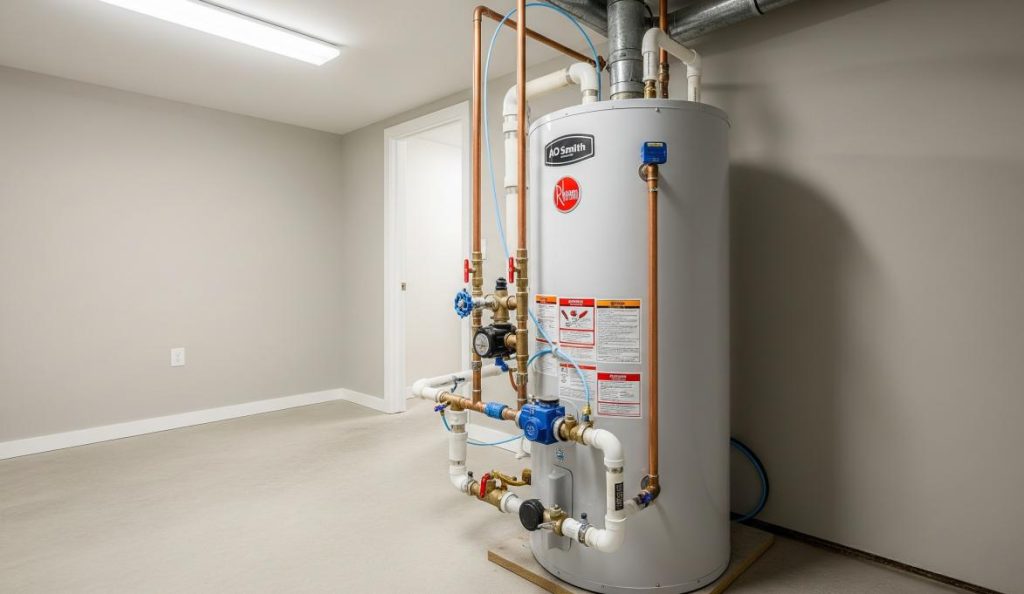
Choosing the right hot water tank in 2025 means balancing efficiency, performance, and long-term savings. With modern options offering advanced technology, better insulation, and cleaner energy sources, there’s never been a better time to upgrade.
Water heating is one of the top energy expenses in a home, roughly 17% of total energy use. That’s why selecting the right system matters. The goal is simple: reliable hot water, lower bills, and a system that fits your lifestyle.
The Main Types of Hot Water Systems
There are four primary types of water heaters, each offering distinct benefits depending on your household size, climate, and budget.
Conventional Storage Tanks
These are the most common. They store 40 to 60 gallons of hot water, ready for immediate use. While affordable and easy to install, they experience standby heat loss, which lowers efficiency over time.
Tankless Water Heaters
Also known as on-demand systems, these units heat water only when needed. They eliminate standby losses and offer a continuous supply, but may struggle to meet high demand across multiple fixtures. Installation costs are higher.
Hybrid Heat Pump Water Heaters
These systems extract heat from the air and transfer it to the water. They’re two to three times more efficient than standard electric tanks but require more space and are best suited for temperate indoor locations.
Solar Water Heaters
These use rooftop solar panels to heat water and offer excellent long-term savings. They’re ideal in sunny climates but need a backup for cloudy days. Initial installation is more expensive, but energy costs drop significantly over time.
Key Factors to Consider Before Buying
Beyond choosing a type, evaluating a few key specifications ensures you select a system that performs well under real-world use.
First Hour Rating (FHR)
This number tells you how much hot water the unit delivers during peak demand. A family of four typically needs an FHR between 50 and 70 gallons.
Fuel Source
Options include natural gas, electricity, propane, solar, and in some areas, oil. Gas heaters are typically more efficient and cost-effective. Electric units are easier to install. Solar is ideal for reducing carbon impact, though weather-dependent.
Energy Efficiency
Look for a high Uniform Energy Factor (UEF). This rating shows how efficiently a heater converts energy into hot water. A higher number means better performance and lower operating costs.
Insulation and Smart Features
Modern tanks feature improved insulation to reduce heat loss. Some offer smart connectivity, leak detection, and self-cleaning features to enhance reliability and reduce maintenance.
Top Hot Water Heaters for 2025
Here are some of the best-performing models across various categories, each offering strong reliability, efficiency, and value.
|
Mod |
Type & Fuel |
Key Features |
|---|---|---|
|
Rheem Performance Plus 50 Gal |
Storage, Natural Gas |
77 FHR, efficient burner, 9-year warranty |
|
Rheem Performance Platinum 50 Gal |
Storage, Electric |
Wi-Fi enabled, leak detection, 12-year warranty |
|
Sunbank Solar 40 Gal |
Solar |
High energy efficiency, simple install, 10-year warranty |
|
Stiebel Eltron Tempra 24 Plus |
Tankless, Electric |
4.5 GPM, compact size, advanced flow control |
|
Rinnai RUC98iN Ultra Series |
Tankless, Natural Gas |
9.8 GPM, ultra-low emissions, 12-year warranty |
 el
Installation, Safety, and Maintenance Tips
Installation quality impacts performance, safety, and warranty coverage. Always use a licensed plumber or HVAC technician, especially when changing fuel types or switching to a tankless system.
Proper ventilation is essential for gas units to prevent carbon monoxide buildup. The heater should also be placed away from flammable materials and in a well-ventilated area.
Temperature and pressure relief valves protect against pressure buildup. Test them annually to ensure safe operation.
Maintenance varies by system. Conventional tanks benefit from flushing once or twice a year to remove sediment. Tankless systems may need filter cleaning and descaling. Some newer models have self-cleaning or maintenance alerts built in.
In summary…
The best hot water tank for your home depends on how much water you use, your energy preferences, and your long-term goals. High-efficiency systems reduce costs and environmental impact while offering the comfort of steady, reliable hot water.
Whether you choose a traditional gas storage model like the Rheem Performance Plus or an ultra-efficient solar unit like the Sunbank, be sure to size your system correctly and prioritize energy performance.
Need help making the switch? Contact a specialized company to assess your space, needs, and installation requirements. With the right choice, you’ll enjoy lower bills, dependable service, and peace of mind for years to come.
https://www.youtube.com/watch?v=YT0zTRD7N2s
FAQ
How do I choose the right tank size?
Base it on household demand and the First Hour Rating. Larger families need higher output during peak usage times.
What temperature should my water heater be set at?
Set it to 120°F. This prevents scalding, saves energy, and extends heater life.
Can I install a water heater myself?
Professional installation is strongly recommended. DIY risks include leaks, gas issues, and code violations, which can void your warranty.


