
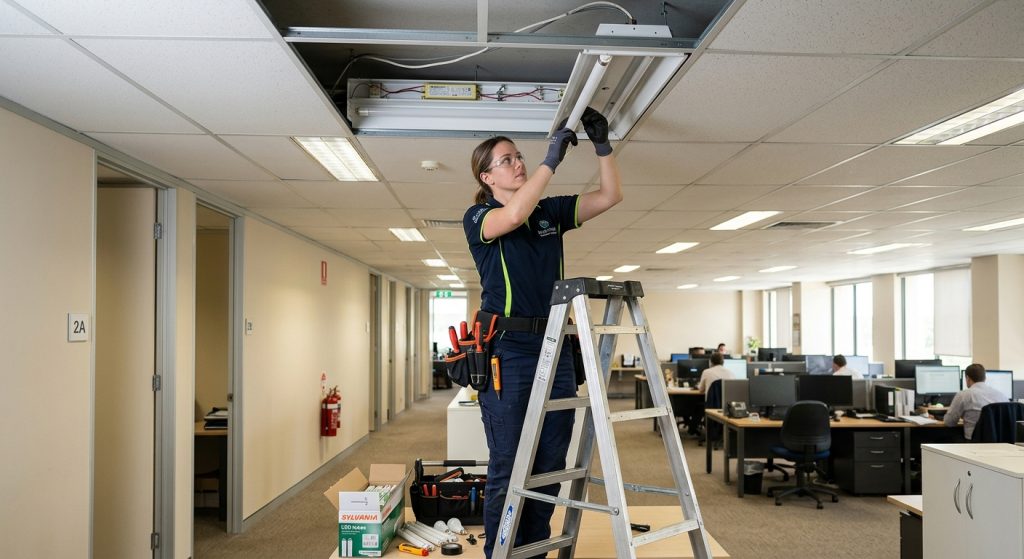
Upgrading to LED lighting can improve energy efficiency, reduce maintenance, and enhance illumination across commercial and residential spaces. However, choosing between complete fixture replacement and lamp conversion requires careful consideration of existing equipment, performance goals, and long-term needs.
Understanding LED Retrofitting Options
Retrofitting to LED services offers two main approaches: replacing existing lighting fixtures or converting them to accommodate LED technology. Each option affects installation requirements, compatibility, maintenance, and lighting quality differently. Understanding these differences helps property owners select a solution that suits their buildings.
Fixture replacement involves removing old luminaires and installing new LED units. Lamp conversion retains existing fixtures while replacing conventional lamps with compatible LED alternatives. Although both approaches modernize lighting, their suitability depends on the condition of current equipment and the intended results.
Evaluating Fixture Replacement
Complete fixture replacement provides an opportunity to modernize the entire lighting system. New LED luminaires often incorporate efficient drivers, improved optics, and integrated controls that older fixtures cannot support.
Assessing Existing Equipment
Older fixtures may contain damaged sockets, deteriorated wiring, corroded reflectors, or outdated components. Replacing these units addresses underlying problems rather than preserving equipment that could compromise reliability. New fixtures can also improve light distribution and reduce unwanted glare.
Replacement suits projects that require substantial changes to brightness, appearance, or control capabilities. Businesses renovating offices, warehouses, retail areas, or outdoor spaces may benefit from luminaires designed specifically for their environments.
Improving Lighting Performance
Modern fixtures can support dimming, occupancy sensors, daylight harvesting, and networked lighting controls. These features help buildings adjust illumination to actual occupancy and available daylight. However, installers must verify control compatibility before specifying equipment.
Fixture replacement also allows designers to select appropriate color temperatures, beam angles, and light outputs. Consequently, the resulting system can better support visibility, comfort, safety, and operational requirements.
Evaluating Lamp Conversion
Lamp conversion offers a different route when existing fixtures remain structurally sound and function properly. Technicians replace conventional lamps with suitable LED products while retaining much of the original installation.
Checking Compatibility
Not every LED lamp works safely or effectively in every fixture. Compatibility depends on lamp dimensions, socket type, operating temperature, enclosed-fixture ratings, and the existing ballast or driver.
Before selecting lamps, technicians should verify several details:
- Confirm that the LED lamp matches the fixture’s socket and physical dimensions.
- Check whether the product requires an existing ballast, a compatible driver, or direct wiring.
- Verify that the lamp suits enclosed fixtures, damp locations, or other specific operating conditions.
- Review manufacturer instructions for dimmers, sensors, and other connected controls.
These checks help prevent flickering, overheating, premature failure, and inconsistent illumination. Some conversions require ballast removal or electrical rewiring, which qualified professionals should assess before work begins.
Considering Practical Limitations
Lamp conversion generally preserves the existing fixture’s appearance and mounting arrangement. This approach can simplify upgrades where access is difficult or architectural features must remain unchanged.
However, older reflectors and lenses may limit light distribution or reduce the benefits of efficient LED lamps. Conversion also cannot correct every structural defect or deliver all the controls available through modern integrated fixtures.
Comparing Long-Term Results
The best option depends on more than the initial installation process. Energy consumption, maintenance demands, lighting quality, and future flexibility all influence the overall value of an upgrade.
Fixture replacement typically offers greater design flexibility and opportunities for integrated controls. Lamp conversion can preserve serviceable equipment and reduce unnecessary material replacement. Nevertheless, actual savings depend on operating hours, product efficiency, electricity use, and maintenance requirements.
A professional lighting assessment can compare expected performance, identify electrical risks, and determine whether existing fixtures justify retention. Reviewing these factors before purchasing equipment helps avoid compatibility problems and disappointing results.
Conclusion
Choosing between fixture replacement and lamp conversion depends on existing equipment, performance objectives, and future maintenance needs. Consult a qualified lighting professional to assess compatibility, compare suitable LED solutions, and plan a safe, efficient upgrade.


