
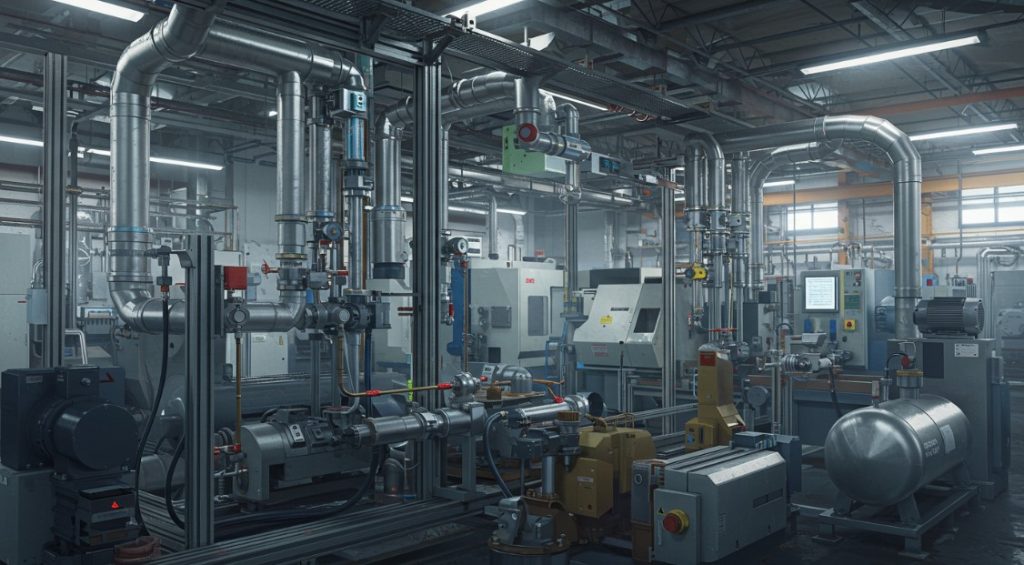
For anyone new to pneumatics, understanding the essential components of a pneumatic system is key. Whether you’re building a simple air-powered project or working on a more advanced automation setup, mastering the basic parts and their roles sets a solid foundation for success.
Understanding Pneumatic Systems
At its core, a pneumatic system uses compressed air to generate motion, making it a popular solution in both hobbyist and professional environments. These systems rely on standardized components that each serve a specific function.
To explore more about fluid power and pneumatic principles, visit this educational resource on air and fluid power.
What is Pneumatics?
Pneumatic systems use compressed air or gas to power machinery and tools. Known for their reliability and speed, they serve a wide range of applications. From cleaning surfaces to moving heavy equipment, pneumatics provide an efficient and cost-effective solution.
Key Components of a Pneumatic System
A standard pneumatic setup includes four essential components: air preparation units, valves, cylinders, and a control interface. Each plays a crucial role in system efficiency and durability.
Air Preparation: The First Step
Before compressed air can power any tool or cylinder, it must be cleaned and conditioned. Proper air preparation ensures system longevity and prevents performance issues.
The Importance of Filtering Air
Filters remove moisture and particles from compressed air to protect the internal components. Installed directly after a manual shut-off valve, a good filter includes an automatic or manual drain for easy maintenance.
Regulators and Lubricators
Regulators control air pressure to maintain consistent output, while lubricators inject small amounts of oil to reduce friction inside tools. For compact setups, consider an integrated filter-regulator-lubricator (FRL) unit.
Actuating Motion: Valves and Cylinders
Once the air is prepared, it moves through valves and into cylinders, creating motion to perform mechanical work.
Types of Valves
The 4-way solenoid valve is essential in pneumatic automation. It directs compressed air to both sides of a double-acting cylinder, allowing it to extend and retract efficiently. These valves are commonly used in programmable systems.
Cylinder Functionality
Double-acting cylinders use air pressure to generate linear movement in two directions. When air enters one side, it pushes the piston while the opposite side is vented, making it ideal for both pushing and pulling tasks.
Automation with Continuous Cycling
For more advanced DIY projects, adding continuous cycling features can streamline operations and improve efficiency.
Cycling Components
By combining multiple valves with a solenoid, your pneumatic system can automate repetitive motions. This configuration allows the cylinder to extend and retract continuously without manual input.
Controlling the Cycle Speed
Flow control valves are used to adjust how fast the cylinder moves. By restricting air flow, you can fine-tune the speed and precision of your system’s operations.
Safety Features: Two-Hand Control Systems
Safety is critical, especially in systems involving mechanical movement. A two-hand control system ensures that users remain in a safe position while activating a press or machine.
Implementing Safety Controls
This safety mechanism uses 3-way valves that feed pilot air to a master valve. The system requires both buttons to be pressed simultaneously to operate. Releasing either button immediately stops motion, reducing the risk of injury.
Enhanced Safety Measures
Additional safety elements include pressure switches and regulators. These devices monitor air pressure and signal when set levels are reached, preventing overpressure and equipment damage.
Summary Table: Pneumatic System Components
| Component | Function |
|---|---|
| Filter | Removes contaminants and moisture |
| Regulator | Controls air pressure |
| Lubricator | Adds oil to reduce friction and wear |
| 4-Way Solenoid Valve | Directs air to extend/retract cylinders |
| Double-Acting Cylinder | Converts air pressure into linear motion |
| Flow Control Valve | Adjusts the speed of cylinder movement |
| Two-Hand Control | Enhances operator safety during machine operation |
| Pressure Switch | Monitors and signals air pressure levels |
 Getting Started on Your DIY Pneumatic System
Understanding the basic components of a pneumatic system — from air preparation to automation and safety — gives you the confidence to start building functional and reliable setups.
Ready to start your project? Visit AGM Canada for expert guidance and essential supplies to bring your pneumatic system to life.
https://www.youtube.com/watch?v=gjCfbgKbAbc


