
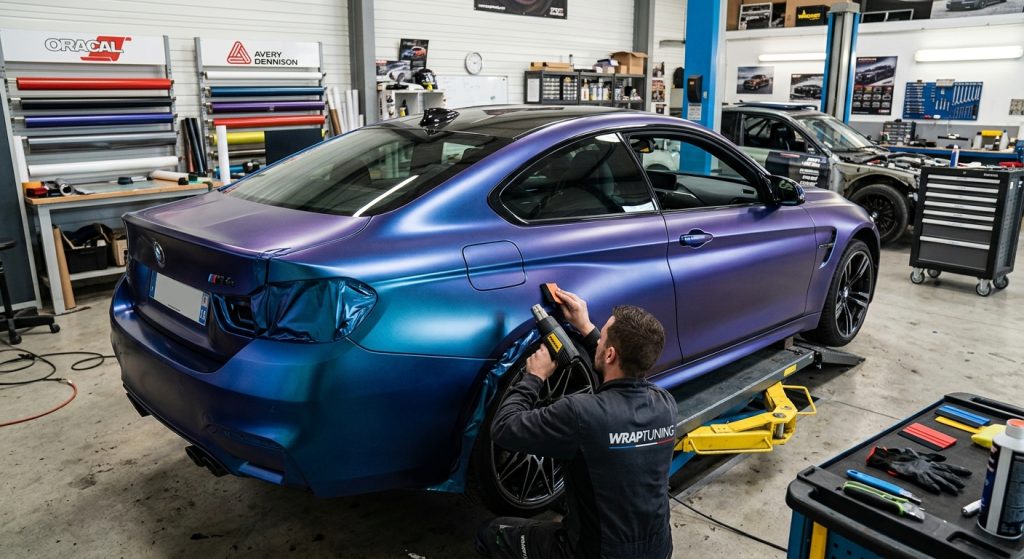
Recesses, door-handle pockets, and deep bumper channels test a wrap more severely than broad, flat panels. Stretching cast vinyl into these contours creates tension that can pull the film back after installation, even when the surface initially looks smooth.
Temperature Targets for Cast Vinyl in Recesses
Cast vinyl suits automotive wrapping because it bends around complex shapes more readily than many other films. However, stretching changes its structure and leaves internal tension, often described as the film’s memory effect.
Installers commonly use a post-heating range around 80–95°C (175–200°F) on stretched areas. This range provides a practical reference, not a universal setting: always follow the specific product bulletin.
Application heat and post-heat serve different purposes. Moderate warmth improves conformability during shaping, while post-heating stabilizes the film after positioning and trimming. Confusing these stages can leave a recess vulnerable to lift-back.
| Stage | Typical guidance | Purpose |
|---|---|---|
| Shaping | About 30–40°C (86–104°F), where suitable | Improve flexibility for forming |
| Post-heating | Often 80–95°C (175–200°F) | Stabilize stretched sections |
| Verification | Use the film maker’s stated target | Support accurate temperature control |
These figures serve only as general reference points. Film construction, surface finish, stretch level, and ambient conditions affect heat retention and the time needed to reach the target.
Recess Preparation and Film Tension
Reliable post-heating starts before the heat gun turns on. Wash the panel with non-wax soap, dry it fully, then wipe away grease and polish residue with a suitable cleaner.
Pay particular attention to recesses and trim gaps. Dirt, wax, or moisture can weaken adhesive activation, so extra heat cannot compensate for poor preparation. A clean, dry surface gives the adhesive a fair chance to bond.
Position the film with enough material to cover the contour without pulling it excessively. Squeegee from the center outward, and guide air toward an open edge rather than trapping it in the channel.
Stretch only as much as the shape requires. Overstretching thins the film and increases its tendency to retreat, while wrinkles pressed into place can remain visible after heating.
Good preparation also includes an appropriate workspace. A clean indoor area limits dust, while a moderate room temperature helps the film remain workable and prevents the adhesive from grabbing too quickly.
Post-Heating Technique for Deep Channels
After applying and trimming the film, identify every area that experienced substantial stretch. Inspect door pockets, bumper corners, mirror housings, wheel arches, and sharp transitions.
Use an infrared thermometer to check the film’s surface temperature. Hand-feeling cannot provide a reliable reading, and a heat gun’s display may not match the temperature on the vinyl.
Move the heat source steadily across the target area. Keep it travelling instead of concentrating warmth on one spot, which may damage the film or the vehicle’s finish.
Measure across the stretched section, not just one convenient point. Confirm that the entire area reaches the product’s specified target, then let the film cool without touching or pressing it.
- Follow the film manufacturer’s post-heating instructions.
- Check surface temperature with an infrared thermometer.
- Heat evenly, then allow the film to cool undisturbed.
- Inspect edges and recesses again after cooling.
This measured approach reduces uneven heating and helps prevent premature lift. A torch demands particular care because it can deliver intense heat quickly.
Common Causes of Recess Lift-Back
When vinyl lifts from a recess, the cause often combines tension, contamination, and incomplete heating. The film may appear secure at first, then retract as it cools or encounters warm weather.
Skipping the post-heat pass leaves stretched material under stress. Missing the target can also matter, but excessive heat creates separate risks, including distortion, gloss changes, or damage to the underlying finish.
Trimming too close can expose an edge with little material to hold. Where the design allows, tuck the film behind trim or leave a suitable wrapped edge, following product guidance.
After installation, allow the wrap to settle before washing. Hand washing with suitable soap protects edges better than aggressive pressure, especially near recesses and trimmed borders.
Durable Results Through Temperature Control
The right post-heat temperature for cast vinyl usually falls near 80–95°C (175–200°F), yet the film maker’s specification must guide the final choice. The target stabilizes stretched recesses; it does not excuse excessive force or poor surface preparation.
Careful cleaning, modest stretching, measured heating, and undisturbed cooling work together. For complex panels or uncertain film specifications, a qualified automotive wrapping installer can assess the material and provide suitable guidance.


