
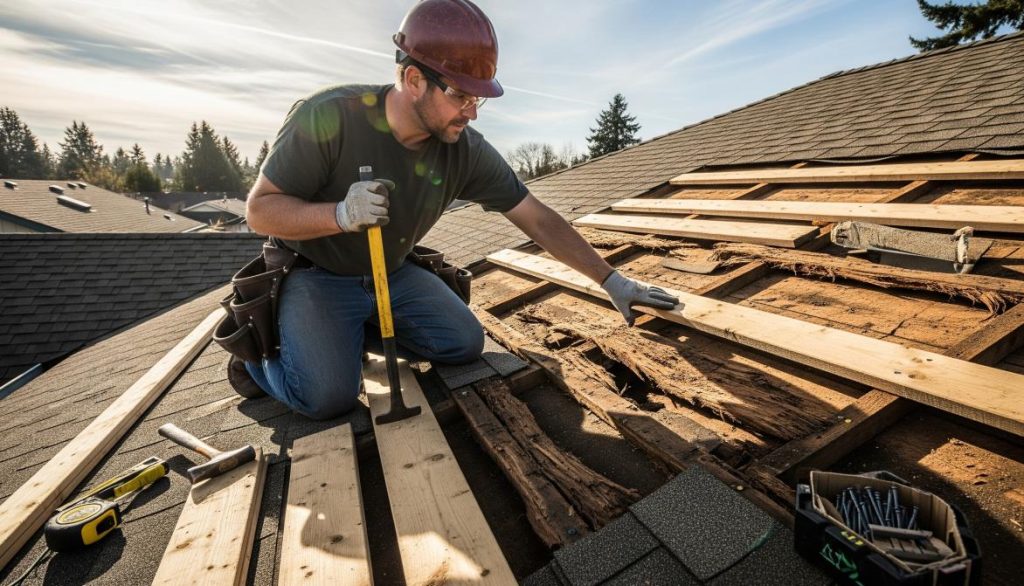
Your roof’s wooden framework is the essential support for your home’s protection against the elements. When this wood begins to decay, it creates a serious risk to your house’s safety and stability. Overlooking early signs of damage can lead to expensive repairs and even structural collapse. This guide explains why timely wood replacement is so important, how to spot decay, and the best ways to tackle these issues before they get worse.
Why Timely Roof Wood Replacement Matters
Delaying repairs on your roof’s wood components is like ignoring the foundation of a tall building, it weakens the entire structure. Wood that has been compromised by moisture, pests, or age can lead to sagging roofs, leaks, and even catastrophic collapses. Taking prompt action preserves your home’s security and maintains property value.
Wooden elements such as rafters, trusses, and decking serve as the frame that supports roofing materials. When these components degrade, the entire roofing system’s performance is jeopardized. Not only does this expose your home to water infiltration, but it also endangers electrical wiring, insulation, and interior finishes. Moreover, weak wood is a magnet for mold growth, which threatens both your home’s health and your family’s wellness.
Early Detection is Key
The sooner you detect signs of wood degradation, the easier and less expensive the repairs will be. Regular inspections, ideally conducted by professionals, can reveal moisture damage, rot, or infestation before visible consequences occur. Recognizing problems early allows for selective wood replacement instead of tearing off entire sections, saving both money and time.
Environmental Influences on Roof Wood Longevity
Wood in your roof system faces numerous environmental challenges. High humidity, prolonged wet conditions, and inadequate ventilation accelerate deterioration. In addition, severe weather, like hail or heavy snow, impacts the wood’s structural integrity. Ensuring proper roof ventilation and waterproofing extends the life of roofing wood and reduces the risk of premature decay.
Common Signs Indicating Roof Wood Replacement is Urgent
Recognizing the warning signals that your roof wood is failing can help you act before extensive damage occurs. Some signs are subtle and require close inspection, while others are impossible to overlook.
Visible Sagging or Deformities
If you notice sections of your roofline sagging or uneven, this often indicates weakened wooden supports underneath. Such deformities can arise from prolonged water damage or termite infestation. Immediate assessment and reinforcement are crucial to prevent potential collapse.
Dark Stains and Mold in the Attic
Spotting darkened patches or mold growth in your attic is a tell-tale sign of water infiltration affecting the roof wood. Mold thrives in moist conditions, and these spots often indicate hidden leaks that have compromised the wooden structure. Without swift intervention, mold can spread and further degrade the wood and indoor air quality.
Crispy or Rotten Wood Upon Touch
During inspections, if the wood feels brittle, crumbly, or soft, it has likely suffered significant rot. This condition undermines the strength needed to support roofing materials. Rotting wood must be replaced promptly to restore roof stability.
Pest Damage Evidence
Termite galleries, wood-boring beetle exit holes, or carpenter ant debris are undeniable markers of insect infestation. These pests consume or hollow out wood, critically weakening the framework. Elimination of pests combined with wood replacement is necessary to halt further destruction.
Best Practices for Replacing Roof Wood
Addressing roof wood replacement requires precision, expertise, and the correct choice of materials. A poorly managed renovation can lead to recurring issues or structural hazards.
Professional Assessment and Material Selection
Begin with a thorough evaluation by a certified roofing contractor or building inspector. They can determine the extent of damage and recommend which sections must be replaced. Selecting pressure-treated lumber or wood species resistant to rot and insects, such as cedar or redwood, improves durability and ensures long-term performance.
Ensuring Adequate Ventilation and Moisture Control
One of the biggest threats to roof wood is moisture buildup. Integrating proper ventilation systems, including ridge vents and soffit vents, helps maintain airflow and reduce humidity. Waterproof barriers beneath roofing materials shield wood from rain and snow, preventing water infiltration that accelerates decay.
Executing Repairs with Precision
Replacing damaged wood involves removing compromised sections carefully to avoid unnecessary damage to surrounding materials. New wood must be securely fastened, aligned, and sealed. A skilled roofing professional will also inspect adjoining areas such as flashing, gutters, and roofing surfaces to resolve any contributory problems.
The Cost and Benefits Breakdown of Roof Wood Replacement
Investing in roof wood replacement might seem daunting, but the division between cost and benefits leans heavily toward long-term savings and safety.
| Factor | Cost Considerations | Long-term Benefits |
|---|---|---|
| Material Quality | Higher upfront cost for treated or premium wood | Resists rot, pests, and weathering for decades |
| Labor | Professional rates vary with complexity | Warranty-backed work minimizing future expenses |
| Preventative Measures | Cost of ventilation and moisture barriers | Extends wood life and prevents frequent repairs |
| Energy Efficiency | Potential slight increase in insulation costs | Improved home insulation lowers energy bills |
| Structural Integrity | Cost of annually monitoring and minor repairs | Avoids catastrophic roof failure and high emergency costs |
Rather than gambling with the stability of your home, prioritizing roof wood replacement when needed safeguards your investment and family well-being.
In the end, a proactive approach to roof wood replacement ensures your home remains a safe, dry, and comfortable sanctuary for years to come. Don’t let avoidable wood deterioration compromise your property’s foundation.
Contact a trusted roofing company to schedule an inspection and safeguard your home. Taking action sooner rather than later means less expense, less hassle, and peace of mind for you and your family.


