
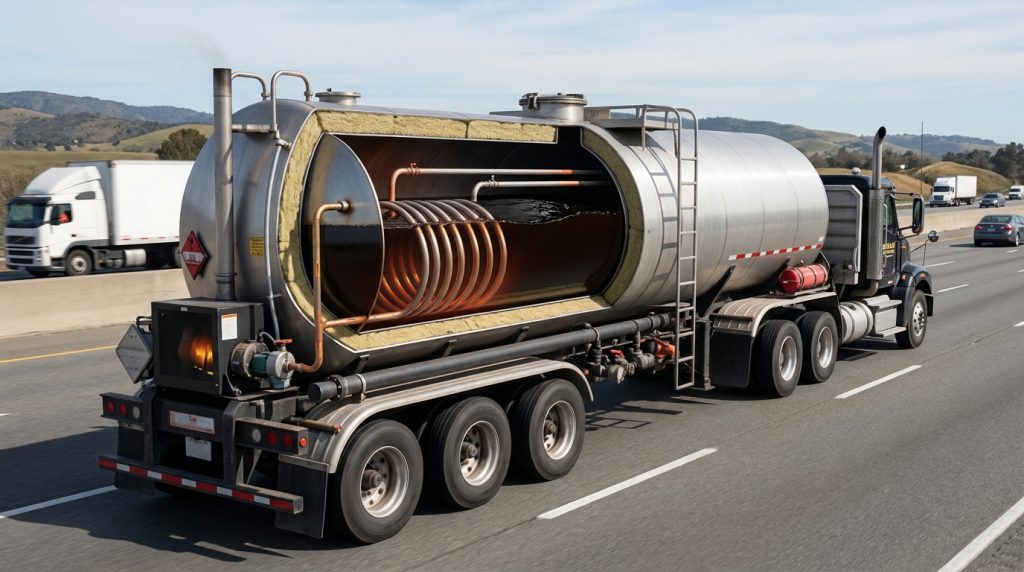
An asphalt tank trailer must do more than carry a heavy, viscous material from one site to another: it must keep bitumen within a suitable temperature range throughout the journey. That depends on a combination of tank design, thermal insulation, controlled heating and careful operating procedures, all working together as road conditions and journey times change.
Heat retention inside an asphalt tank trailer
Bitumen is transported hot because its viscosity changes with temperature: as it cools, it becomes more resistant to flow. The required temperature depends on the product grade and handling specifications, so the goal is not simply to make a tank as hot as possible, but to maintain the range set for safe loading, carriage and unloading.
A heated tank begins its journey with stored energy from the loading process or an onboard heating system. The trailer’s design then slows heat loss, giving the material time to reach its destination without unnecessary reheating.
Tank construction and thermal insulation
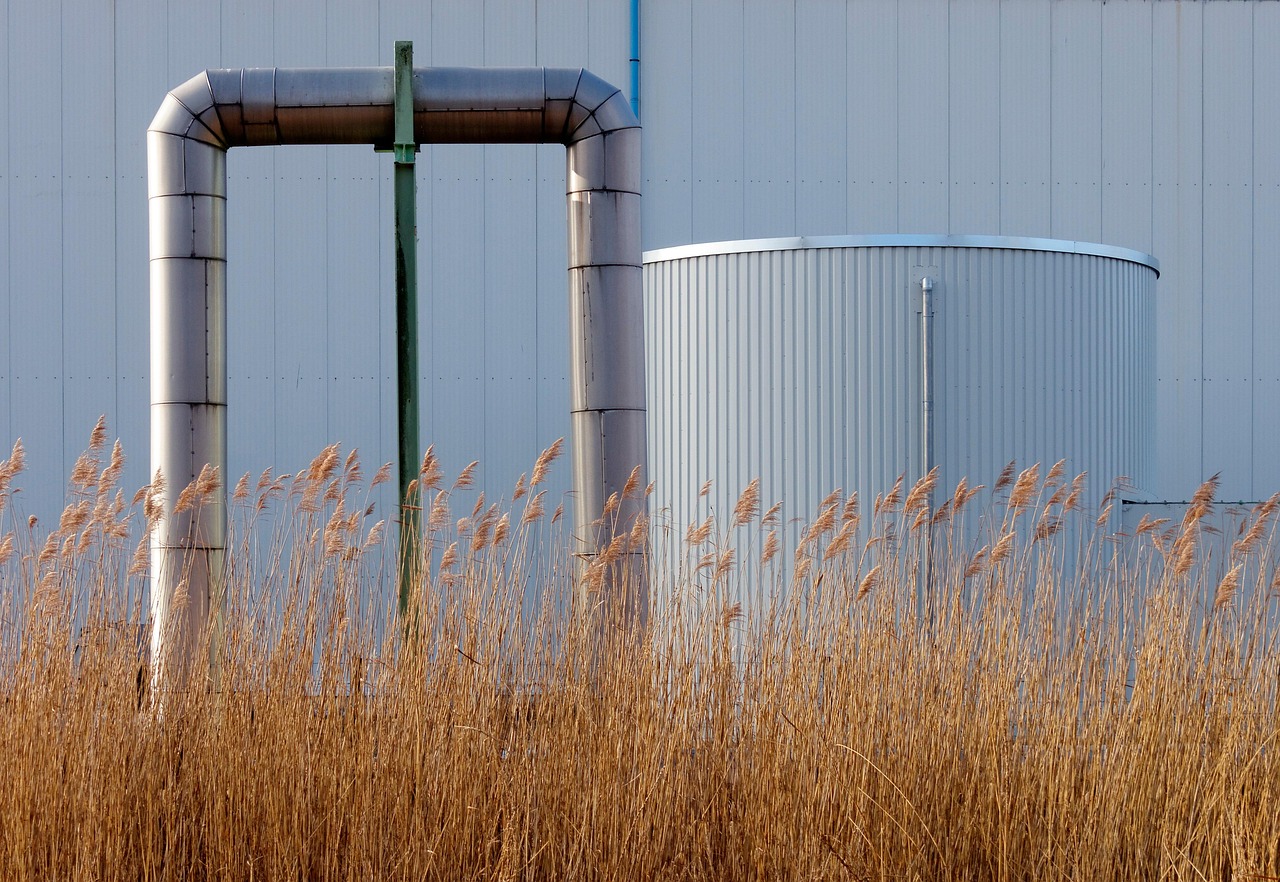
The tank shell contains the hot material, while insulation around it reduces the rate at which heat moves into the cooler outside air. Common insulation systems use durable, heat-resistant materials beneath a protective outer casing, which also shields the layers from weather and road debris.
Insulation does not stop heat loss entirely. Its thickness, condition, coverage around fittings and exposure to wind all affect performance; gaps or damaged cladding can create weak points even when most of the tank remains well protected. For general background on insulating materials, readers can consult this overview of insulation principles.
Heating circuits and stored heat
Some trailers use an onboard burner to warm the load through heating tubes or another indirect system. Keeping the heat-transfer equipment separate from the bitumen helps distribute warmth without exposing the product directly to a flame.
Where onboard heating is available, it is generally used to maintain or restore temperature in line with the equipment instructions and cargo requirements. An additional discussion of thermal insulation concepts can help explain why limiting heat loss matters as much as supplying heat.
Together, insulation and controlled heating form a balance: one slows cooling, while the other can compensate when conditions demand it.
Temperature control during bitumen transport
Keeping bitumen in the desired range calls for more than a heater. Operators need reliable temperature readings, appropriate checks and procedures that account for the material, the trailer and the route.
Monitoring the heated tank
Temperature sensors allow operators to observe conditions at designated points in or around the tank. Readings should be interpreted according to the equipment design, since one measurement may not represent every part of a large load equally well.
Monitoring also helps identify unexpected changes, such as faster-than-usual cooling or a heating system that is not performing as intended. The practical aim is steady, documented control—not repeated heating that could waste energy or expose the cargo to unsuitable conditions.
Loading procedures and heat preservation
Good heat preservation starts before the vehicle leaves the loading point. The tank should be prepared according to its operating instructions, and the product should be loaded at the temperature specified for its grade and intended use.
Before departure, operators can verify that closures are secure, the insulation is intact and monitoring equipment is functioning. These checks reduce avoidable heat loss and support a smoother bitumen delivery, particularly when unloading depends on the material remaining sufficiently fluid.
Because no two journeys have identical conditions, temperature management should follow the cargo specification and the trailer manufacturer’s guidance rather than a universal setting.
Operational choices that support asphalt logistics
Journey planning influences how much heat the cargo retains. Travel time, outside temperature, wind exposure and the number of stops all affect cooling, so dispatch and receiving teams benefit from coordinating the route with the delivery schedule.
The following practices help protect the load and make temperature control more consistent:
- Check the tank’s insulation, outer casing, valves and seals before loading.
- Use calibrated monitoring equipment and record readings in accordance with operating procedures.
- Plan the route and receiving arrangements to avoid unnecessary delays.
- Operate onboard heating only as directed by the manufacturer and cargo specifications.
These measures are most effective when they are treated as one operating system. A well-insulated tank cannot compensate for prolonged delays or faulty monitoring, just as a heater cannot replace sound loading and handling practices.
Safety checks and delivery readiness
Hot bitumen presents burn and fire hazards, so operating procedures must address both temperature management and worker safety. Appropriate protective equipment, controlled access to hot components and compliance with site rules help reduce exposure during loading, inspection and discharge.
At the destination, the receiving setup should be ready before the tanker arrives. Clear communication about connection procedures and unloading requirements can prevent avoidable waiting, while the final temperature check helps confirm that the product remains suitable for the planned operation.
In practice, reliable asphalt logistics depend on coordinated equipment, trained handling and timely communication as much as on the trailer itself.
Performance factors across the journey
The main components have distinct roles, but their combined effect determines whether bitumen arrives in usable condition. This overview shows how each one contributes to heat retention and a dependable delivery.
| Component or factor | Role in transport | Operational consideration |
|---|---|---|
| Thermal insulation | Slows heat transfer from the tank to the surroundings | Inspect the casing and coverage for damage or gaps |
| Heating system | Maintains or restores heat when the equipment permits | Follow manufacturer instructions and cargo specifications |
| Temperature monitoring | Tracks conditions during carriage and handling | Use functioning, appropriately calibrated instruments |
| Route and scheduling | Influence journey duration and exposure to cooling | Coordinate dispatch and unloading arrangements |
Ultimately, an asphalt tank trailer keeps bitumen hot through a managed combination of insulation, suitable heating, accurate monitoring and efficient transport. For cargo-specific settings, equipment checks or a specialist intervention, consult a qualified transport or tanker professional.


