
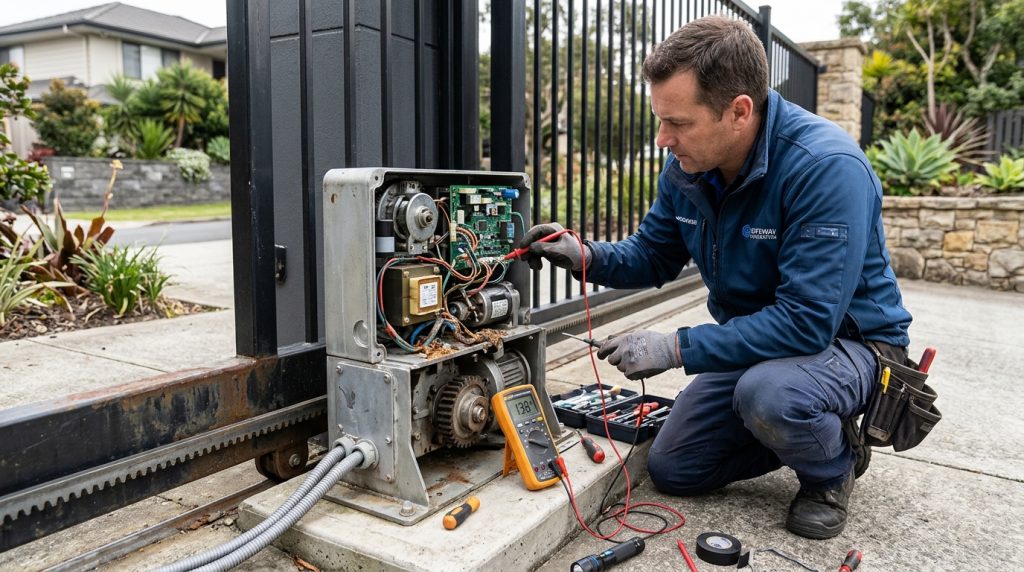
Automatic gates provide convenient access control, improve property security, and simplify everyday entry and exit. However, like any mechanical and electrical system, their components can experience wear, malfunction, or unexpected breakdowns over time. Understanding the common faults identified during gate motor repair helps property owners recognize warning signs, prevent further damage, and maintain reliable gate operation.
Identifying Electrical Problems in Gate Motors
Electrical faults are among the most frequent causes of automatic gate malfunctions. Since gate motors rely on a combination of electrical power, control boards, wiring, and safety devices, a problem affecting any of these components can interrupt normal operation.
Diagnosing Power Supply Interruptions
A gate motor that does not respond to remote controls or access systems may have an electrical supply problem. Technicians begin by checking the power source, circuit breakers, fuses, and electrical connections to identify interruptions.
Common electrical issues include:
-
Blown fuses: Electrical overloads or short circuits can cause fuses to fail, interrupting power to the motor.
-
Loose wiring: Poor electrical connections may result in intermittent operation or complete system failure.
-
Damaged cables: Exposure to moisture, rodents, or physical deterioration can compromise electrical circuits.
-
Power fluctuations: Unstable voltage can interfere with motor performance and potentially damage sensitive electronic components.
A proper diagnosis helps establish whether the problem originates from the external power supply or the gate’s internal electrical system.
Detecting Control Board Malfunctions
The control board manages the commands sent to the motor and coordinates different operating functions, including opening, closing, timing, and safety responses. When this component develops a fault, the gate may behave unpredictably or stop responding altogether.
Technicians inspect circuit connections, electronic components, and diagnostic indicators to identify signs of overheating, moisture damage, or electrical failure. They also verify whether the control board communicates correctly with remote controls, keypads, sensors, and other access devices.
Depending on the extent of the damage, the appropriate solution may involve repairing connections, replacing damaged components, or installing a compatible control board.
Examining Mechanical Problems Affecting Gate Movement
Even when the electrical system works correctly, mechanical defects can prevent an automatic gate from moving smoothly. These problems often develop through regular use, inadequate maintenance, physical impact, or environmental exposure.
Inspecting Motor Wear and Internal Components
Gate motors contain moving parts that transfer power to the gate mechanism. Continuous operation can gradually wear down gears, bearings, shafts, and other internal components.
During a repair assessment, technicians look for unusual noises, excessive vibration, overheating, and reduced operating power. These symptoms may indicate worn gears, damaged bearings, or internal mechanical resistance.
The condition of the motor is evaluated to determine whether individual components can be repaired or whether the entire unit requires replacement. Correct diagnosis also helps prevent unnecessary work on parts that remain functional.
Checking Tracks, Hinges, and Drive Mechanisms
A gate that moves slowly, gets stuck, or stops halfway through its operating cycle may have a mechanical obstruction or alignment issue. These problems are particularly relevant to sliding and swing gate systems.
The inspection generally covers several areas:
-
Sliding gate tracks: Dirt, stones, rust, and physical deformation can restrict movement.
-
Rollers and wheels: Worn or damaged rollers may cause excessive friction and uneven travel.
-
Swing gate hinges: Corrosion, poor alignment, or insufficient lubrication can make opening and closing difficult.
-
Drive chains and belts: Excessive tension, looseness, or deterioration can interfere with power transmission.
-
Gate alignment: A shifted gate structure may place additional strain on the motor.
Resolving these mechanical faults reduces resistance and allows the motor to operate within its intended working conditions.
Investigating Safety and Access Control Failures
Automatic gates incorporate safety features designed to prevent accidents and regulate access. When these systems malfunction, the gate may refuse to close, reverse direction unexpectedly, or fail to recognize authorized commands.
Testing Photocells and Safety Sensors
Photocells detect obstacles within the gate’s operating path and prevent the system from closing when an obstruction is present. If the sensors become dirty, misaligned, damaged, or disconnected, they may send incorrect signals to the control board.
Technicians inspect sensor positioning, wiring, lenses, and communication with the motor system. They also test the obstacle detection function to ensure that the gate responds appropriately.
Other safety devices, including pressure-sensitive edges and safety loops where installed, may also require inspection. These components must function correctly to reduce the risk of injury or property damage.
Troubleshooting Remote Controls and Access Devices
Remote controls, keypads, intercoms, and access cards allow users to operate automatic gates without manual intervention. Communication failures can prevent these devices from sending commands to the motor.
Common causes include depleted remote batteries, damaged transmitters, receiver interference, incorrect programming, and faulty antenna connections. Technicians check signal reception and verify that access devices are properly paired with the control system.
Identifying the source of the communication problem helps restore convenient access without replacing functional motor components.
Addressing Environmental and Maintenance-Related Damage
Outdoor gate motors are regularly exposed to rain, dust, humidity, temperature changes, and other environmental conditions. Without suitable protection and periodic maintenance, these factors can accelerate component deterioration.
Detecting Moisture and Corrosion Damage
Water infiltration can affect electrical connections, circuit boards, motor housings, and other sensitive components. Corrosion may gradually weaken connections, while accumulated moisture can cause short circuits or inconsistent operation.
Technicians examine protective enclosures, cable entries, seals, and exposed metal components for signs of deterioration. They also assess whether the motor has adequate weather protection and drainage.
Recognizing Overheating and Excessive Motor Strain
A motor that operates beyond its intended duty cycle may overheat or activate its thermal protection system. Repeated use, mechanical resistance, incorrect settings, and unsuitable motor sizing can contribute to excessive strain.
Repair professionals assess operating frequency, motor temperature, movement resistance, and configuration settings. Correcting the underlying cause helps prevent recurring shutdowns and premature component failure.
Conclusion
Gate motor repair involves diagnosing electrical failures, mechanical wear, safety sensor problems, communication issues, and environmental damage. Identifying the exact source of a malfunction helps restore reliable operation while protecting the system from further deterioration. Consulting a qualified gate technician ensures an appropriate diagnosis and maintenance recommendations suited to the installation.


